A Few Days in the Lives of 13-Year-Olds
For 4 days, I got to hang out with 23 thirteen-year-olds. We went all over Taiwan (mostly throughout Taipei), as part of their "Culture Trip" that takes place in the seventh grade. I'm glad I went as I got to see more of their personalities come alive, and I got to learn a lot more about Taiwan than I had known before! We toured all over, including Lukang, which was originally a large trading port in the 17th and 18th centuries. By the 19th century, silt deposits had begun to fill up the harbour, and the Japanese closed the port to large ships. At about the same time, some residents in Lukang also refused to allow trains and highways to be built near the city, so the glory days of Lukang went by the wayside. However, it is now a very well preserved Taiwanese village with amazing architectural sites.
 Playing with traditional Chinese toys,
including stilts (and the Chinese yo-yo)

Swinging and walking on stilts
 The Folk Arts Museum in Lukang (central Taiwan): Built in
the Japanese era and originally owned by a local wealthy family.
 Inside the Longshan temple - notice the
octagonal doorway?
 A door inside the temple.
 This is another door inside the temple. The
reason it has a large threshold is so that
evil spirits can't get inside.
 The doorway to Longshan Temple, one of the
best-preserved Qing dynasty temples in Taiwan.
 We drove further up to Taichung, and went to
the Science Museum (awesome place!), and were
greeted by this giant construction worker. (Yes,
he is inflatable.)
 We also took the kids to an Acrobatics &
Beijing Opera show. Part of the tour included
a lecture on costumes and masks. These guys
are fakes, but look really awesome.
 Every face colour tells you if they're good
or bad, and their outfits tell you if the
characters are poor or rich. Unfortunately,
I can't remember which is which anymore...
 Up in Hongshulin station (near Tamshui), there are
fields of mangroves! Who knew?! And why on earth
are they called hongshulin (red forests) when they
aren't red??
 Look really closely and you can see that they
are tiny crabs in the mud, with only one GIANT claw!
 Alethia University (with the original building,
Oxford College, shown) was founded by Dr. Mackay,
a Canadian missionary to Taiwan in 1872.
 The university has one of the tallest (if not
the tallest) pipe organs in Taiwan. We were treated
to a beautiful performance. I believe they play
everyday at noon for the public!
 The joys of the trip included sleeping for many
nights on this very gym floor. We also had a
snowball fight - Taiwanese style :).
 This is the British consular residence that sits
right next to the famous Fort San Domingo fort.
The fort changed hands several times, beginning with
the Spanish, then Chinese, then British, then Japanese,
and at some point, the Aussies & Americans also were here.
 A trip without a story is not a good trip! After
the fort, the kids were given free time to explore
Tamshui's night markets. Within five minutes of "exploring"
a bunch of them come running up to us, and asking us to help
one of them get his glasses. Where were they? About 30 feet down in
the mud by this harbour. So there is my colleague, climbing along a steep
ledge to see if he can get closer to them...
 Plan B: The Coast Guards (or whoever they were) said
they could not help, but kindly gave us a small net.
The restaurant right on this pier gave us a broom
and some packing tape. With all our brains put together, we
created a long net, which Jim then used to attempt to fish
the glasses from the mud.
 It was over an hour later, with a change
in the fishing gear (now a coat hanger instead
of a net) and with the help of the Search & Rescue
spotlight that my other colleague, Matt, managed to hook
this poor student's glasses from the mud. It got exciting
as the tide was coming in to fill up the harbour!
 The Chiang Kai Shek Memorial Hall. I'm sad
I didn't take a photo of the entire gate as its
name has now been changed to "Zi You Guang
Chang", which means "Freedom Square." I'd try
to explain the name change, but it'd take a few
more dozen blogs.
 The inside of the Museum of Natural History.
Again, who knew this was in Taipei?!
 The Presidential Palace. Built originally by the
Japanese. Notice the grandeur of the tower, which
was used to "shock & awe" the Taiwanese.
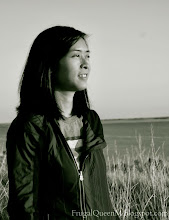
 Some of the girls that I teach.
The 2-28 Peace Memorial. Again, it would take
another blog to discuss, but basically, there was a
massacre in 1948, where up to 30,000 Taiwanese were
murdered. It was really interesting going to the museum,
which is dedicated to political activism of sorts, as one of my student's
father's photo was up on the wall. Apparently, he was a key player
in the independence movements of Taiwan in the early days!
another blog to discuss, but basically, there was a
massacre in 1948, where up to 30,000 Taiwanese were
murdered. It was really interesting going to the museum,
which is dedicated to political activism of sorts, as one of my student's
father's photo was up on the wall. Apparently, he was a key player
in the independence movements of Taiwan in the early days!


.JPG)

No comments:
Post a Comment